Category

Indoor Air Quality

Reducing Allergens in Your Home with HVAC Solutions

Reducing Allergens in Your Home with HVAC Solutions

By Air Conditioning, Indoor Air Quality

Spring brings warmer weather and blooming landscapes, but for many homeowners, it also means an increase in allergy symptoms. Pollen, dust, pet dander, and other airborne particles can easily make their way into your home, affecting your indoor air quality and overall comfort. The good news is that your HVAC system can play a major role in reducing these allergens and creating a healthier living environment.

Below are several effective HVAC solutions that can help you manage spring allergies and breathe easier at home.

Upgrade Your Air Filtration System

One of the most important defenses against indoor allergens is your HVAC system’s air filter. Standard filters are designed to protect your system, but higher-quality filters can also capture much smaller particles that trigger allergies.

High-efficiency filters, such as those with a higher MERV rating, are better at trapping pollen, dust, mold spores, and pet dander. Upgrading your filter can significantly reduce the number of airborne irritants circulating through your home.

It is also important to replace your filter regularly. During allergy season, checking your filter monthly is a good habit. A clogged filter not only reduces air quality but can also make your system work harder, leading to higher energy costs.

Consider Installing UV Lights

Ultraviolet (UV) lights are another powerful tool for improving indoor air quality. Installed within your HVAC system, these lights target and neutralize biological contaminants such as mold, bacteria, and viruses.

While UV lights do not capture particles like a filter does, they help prevent the growth of microorganisms on your system’s coils and other components. This reduces the chance of these contaminants being circulated throughout your home.

For homeowners dealing with persistent allergy symptoms or concerns about mold, UV lights can be a valuable addition to your HVAC setup.

Keep Up with Regular HVAC Maintenance

Routine maintenance is essential for keeping your HVAC system clean and functioning properly. Over time, dust and debris can build up in your system, contributing to poor air quality and spreading allergens throughout your home.

A professional HVAC tune-up typically includes cleaning key components, checking airflow, and ensuring everything is operating efficiently. This helps prevent the buildup of contaminants and keeps your system running smoothly.

Regular maintenance also allows technicians to identify potential issues early, which can help you avoid costly repairs and ensure your system is ready to handle the demands of the season.

Maintain Clean Ductwork and Vents

Your ductwork plays a major role in distributing air throughout your home. If dust, pollen, or debris accumulates in your ducts, it can be recirculated every time your system runs.

Keeping vents clean and ensuring ducts are properly sealed can help reduce the spread of allergens. In some cases, professional duct cleaning may be recommended, especially if there is visible buildup or a history of indoor air quality issues.

Improve Overall Indoor Air Quality

In addition to filtration and UV solutions, there are other ways your HVAC system can support better air quality. Proper humidity control, for example, can help limit the growth of mold and dust mites, both of which thrive in overly damp environments.

Whole-home air purifiers and dehumidifiers can be integrated into your HVAC system to provide an added layer of protection against allergens. These systems work alongside your heating and cooling equipment to create a more balanced and comfortable indoor environment.

Breathe Easier This Spring

Managing spring allergies starts with improving the air inside your home. By upgrading your air filtration, considering UV light installation, and staying consistent with HVAC maintenance, you can significantly reduce airborne allergens and create a healthier space for your family.

If you are looking to improve your indoor air quality or want to explore HVAC solutions for allergy relief, the team at Hauck Bros., Inc. is here to help. Contact us today to schedule a consultation and take the first step toward cleaner, more comfortable air in your home.

Spring Air Conditioning Maintanence

Why Your HVAC System Needs a Spring Tune-Up

By Air Conditioning, helpful tips, Indoor Air Quality, Maintenance

Prepare Your Heating and Cooling System for the Season Ahead 

As winter fades and temperatures begin to rise, many homeowners and business owners shift their focus from heating to cooling. Spring is the ideal time to make sure your HVAC system is ready for the warmer months ahead. Scheduling a spring tune-up helps ensure your system runs efficiently, prevents unexpected breakdowns, and keeps your home or building comfortable as the weather changes. 

At Hauck Bros., we recommend seasonal maintenance to help our customers stay ahead of potential issues and keep their systems operating at peak performance. 


Prepare Your Air Conditioning System for Warmer Weather 

After working hard through the winter months, your HVAC system may have accumulated dust, debris, and normal wear on important components. A professional spring inspection allows technicians to clean and evaluate your cooling system before it is needed every day. 

During a typical spring HVAC tune-up, technicians may: 

  • Inspect and clean system components 
  • Check refrigerant levels 
  • Test the thermostat for accuracy 
  • Inspect electrical connections 
  • Clean condenser and evaporator coils 
  • Evaluate airflow and system performance 

These steps help ensure your air conditioning system is prepared to handle the heat of summer. 

Improve Energy Efficiency 

A well-maintained HVAC system operates more efficiently. When components are clean and properly adjusted, the system does not need to work as hard to maintain comfortable temperatures. 

Improved efficiency can lead to: 

  • Lower energy consumption 
  • Reduced monthly utility bills 
  • More consistent indoor comfort 

Even something as simple as replacing a dirty air filter can improve system performance and reduce strain on your equipment. 


Prevent Unexpected Breakdowns 

Few things are more frustrating than having your air conditioning system fail during the hottest days of the year. Spring maintenance helps identify minor issues before they turn into larger, more expensive problems. 

During a tune-up, a technician can detect worn parts, loose connections, or refrigerant issues early. Addressing these concerns in the spring helps reduce the risk of emergency HVAC repairs when your system is under heavy summer demand. 


Extend the Life of Your HVAC Equipment 

HVAC systems represent a significant investment for homeowners and businesses. Regular maintenance helps protect that investment by reducing wear and tear on important components. 

Routine inspections, cleaning, and adjustments help your equipment operate as designed, which can extend the lifespan of the system and delay the need for HVAC replacement. 

Improve Indoor Air Quality 

Spring is also a good time to focus on the air quality inside your home or building. Pollen, dust, and allergens become more common during the spring months, and your HVAC system plays an important role in filtering these particles. 

During your spring tune-up, technicians can check and replace filters, inspect air filtration systems, and make recommendations for improving indoor air quality. 


Stay Comfortable All Season Long 

Seasonal HVAC maintenance helps ensure your system is ready to keep you comfortable as temperatures change. Whether you manage a commercial property or want to keep your home cool and comfortable, a spring tune-up is a simple step that can prevent many common HVAC issues. 


Schedule Your Spring HVAC Tune-Up with Hauck Bros. 

Preparing your HVAC system for spring is one of the best ways to maintain comfort, efficiency, and reliability throughout the year. Hauck Bros. has been serving homeowners and businesses in Springfield, Dayton, Columbus, and the surrounding communities since 1921. 

Our experienced technicians provide thorough inspections, cleaning, and maintenance to keep your system running smoothly. 

Contact Hauck Bros. today to schedule your spring HVAC tune-up and make sure your heating and cooling system is ready for the season ahead. 

How to Improve Indoor Air Quality with Proper HVAC Maintenance

By Indoor Air Quality, Maintenance, Residential

Indoor air quality (IAQ) plays a crucial role in the health and well-being of everyone inside a building, whether it’s a home or business. One of the most effective ways to ensure clean and healthy indoor air is through proper HVAC maintenance.

Here are a few tips to help you with your IAQ:


Replace filters on a regular basis

Start by prioritizing regular filter replacement. HVAC filters help capture dust, pollen, pet dander, and other airborne particles, preventing them from circulating in your indoor air. Check your filters monthly and replace them as needed. This simple maintenance task can significantly enhance your indoor air quality.

Keep the System Clean:

Dust and debris can accumulate inside your HVAC system over time, leading to poor air quality. Make sure you clean the exterior of your system, including the vents, registers, and ductwork on a regular basis. Professional duct cleaning can also remove built-up contaminants, helping to improve air circulation and reduce the potential for common allergens.

Control Humidity Levels:

Excessive humidity can contribute to mold growth and worsen respiratory issues. Monitor and control the humidity levels in your home by using a dehumidifier when necessary. This will help maintain a healthy and comfortable environment while also helping to reduce the risk of mold and mildew.

Schedule Professional Maintenance:

Routine professional maintenance is vital for ensuring optimal HVAC performance and indoor air quality. Schedule regular inspections and maintenance visits with a qualified HVAC technician. They will assess the system, clean components, identify potential issues, and recommend necessary repairs or adjustments.
Investing time and effort into proper HVAC maintenance can significantly improve indoor air quality, promoting a healthier and more comfortable living environment. By following these maintenance tips, such as regular filter replacement, system cleanliness, humidity control, and professional maintenance, you can enjoy cleaner air, reduce allergens, and enhance the overall well-being of your home or business. Prioritize indoor air quality and take the necessary steps to maintain a clean and healthy living space for you and your loved ones. Schedule a time for a Hauck Brothers technician to talk to you about setting up a maintenance plan. With a Hauck Bros. maintenance plan, you can take comfort in knowing your system is in optimal condition, helping to prevent future costly repairs. By proactively maintaining your HVAC system, you can avoid unexpected out-of-pocket expenses and ensure its consistent performance.

Spring HVAC Maintenance Checklist

Spring HVAC Checklist

By Air Conditioning, Heating, Home Automation, Indoor Air Quality, Maintenance, Residential, Thermostats

7-Point Spring Checklist for Your HVAC System

With the beginning of spring on the horizon, there’s no better time to check on the state of your HVAC system. After a long, harsh winter that can put stress on your equipment, a good spring cleaning and maintenance check is the perfect way to make sure your system is ready for the warmer spring months.

Ready to start cleaning? Check out these 8 tips to prepare your home for spring.

  1. Change your air filter

If you haven’t changed your air filter in a while, make it a priority for spring. A dirty air filter can spread dust, dander, and bacteria throughout your house, causing health problems like asthma and allergies.

Additionally, a clogged filter restricts airflow, meaning your HVAC system has to work harder to heat and cool your house. Check and replace your filter to increase your energy efficiency and start circulating clean, breathable air in your home.

  1. Clean your air vents

Your air vents accumulate dust, pet hair, mold, and other debris, especially during winter. Remove the vents on your floor and ceiling with a screwdriver and use a vacuum to clean out the dirt.

Then, wash your vents with soap and water and let them air dry before replacing them. This helps to ensure that the dust and dirt on your vents don’t get blown around when it’s time to turn on the AC.

  1. Dust your ceiling fans

The blades of your ceiling fans are another place where dust and hair tend to collect. Since you don’t want that dirt to fling around the room once you turn them on, make sure to dust and wash your fans’ blades.

Use a ladder to reach all surfaces and a cloth or sponge to gently wash each blade. Just don’t turn the fan on before the blades dry – dust clings to damp blades.

  1. Install an air purifier

Spring is an ideal time of the year to install an air purifier. Air purifiers like ionizers can eliminate germs, mold, and allergens that have been lingering in your home all winter.

They also help to neutralize odors, get rid of harmful indoor chemicals, and improve your sleep. Air purifiers have even been shown to increase life expectancy by improving indoor air quality.

  1. Test and clean your air conditioner

As the weather gets warmer and you switch to using your AC, run a quick test to ensure it’s working properly. You don’t want to end up on a 90+ degree day with a broken or inefficient AC unit.

Also, make sure to clean the area around your unit outside. Debris like leaves, shrubs, and grime can accumulate and block airflow. There should be two feet of clear space around your unit for it to function properly, so remove any weeds and trim shrubs in the area. Clean the coils and the condenser with a soft-brush vacuum and a hose to wash away dirt. Once it’s completely dry, you can turn on the power.

  1. Upgrade to a smart thermostat

If you haven’t already changed to a smart thermostat, this spring is a great opportunity to make the switch. Smart thermostats can save you up to 20% a year on energy costs, so you’ll likely lower your AC bill after it’s installed. With the current rising prices on gas, food, and more, every bit of savings counts.

Plus, with a smart thermostat, you can adjust your home’s temperature from anywhere, anytime, from your smartphone. On a transitional spring day, you can turn off the heat and turn up the AC, all while you’re at work. When you get home, your house will be comfortable and cool.

  1. Schedule a maintenance appointment

Regular professional maintenance is essential to keeping your HVAC system running smoothly throughout the year. By scheduling a maintenance appointment for the spring, you can avoid the risk of working your system too hard once the hot weather hits.

Preventive maintenance can help keep your home’s air clean, lower utility and repair costs, extend the life of your equipment, and improve your home’s overall comfort. Reach out to our skilled technicians at Hauck Bros. to schedule your maintenance services today!

Related Posts

How a Zone Control System Can Save You Money

How a Zone Control System Will Save You Money

| Air Conditioning, Cooling, Furnaces, Heating, Home Automation | No Comments
When it comes to your home’s energy costs, every little bit of savings counts. Keeping your entire house cool during the summer or cozy in the winter can be an…
Spring HVAC Maintenance Checklist

Spring HVAC Checklist

| Air Conditioning, Heating, Home Automation, Indoor Air Quality, Maintenance, Residential, Thermostats | No Comments
7-Point Spring Checklist for Your HVAC System With the beginning of spring on the horizon, there’s no better time to check on the state of your HVAC system. After a…
Home Automation

Home Automation

| Home Automation | No Comments
What Are the Benefits of Home Automation? As the technology becomes more widespread and affordable, home automation is an increasingly popular way to manage your home’s many appliances and devices.…

Want to learn more? Contact us today!

Contact Us
IAQ Winter Weather

IAQ – Winter Weather

By Indoor Air Quality

What Causes Poor Indoor Air Quality in Winter?

The winter season usually means spending lots more time indoors, but if your indoor air quality is poor, you could potentially be damaging your health. Pollutants, chemicals, dry winter air, and more can all contribute to poor indoor air quality and lead to illness.

Luckily, there are actions you can take to solve these problems and protect your family’s health. Read on to learn more about some of the factors that can negatively impact your indoor air quality and how to fix them.

Dry winter air

Contrary to popular belief, dry air in the winter is caused by cold outdoor air, not the warm air pumped into your house via your furnace. Even with excellent insulation, cold, dry air in below freezing temperatures can enter your home and cause problems. Not only does dry air lead to cracked, dry skin, but a dry nose and throat can increase the likelihood of catching viruses like influenza.

To combat dry air indoors, a humidifier is key. Small units are available to humidify single rooms, if you’re only needing added moisture in a small space. Whole house humidifiers, on the other hand, can help you control the humidity of your entire house to ensure that your family stays healthy, while making sure the moisture level doesn’t get high enough to cause mold.

Insulation

Modern or newly renovated homes can be nearly air-tight due to improved insultation. While insulation is great for reducing drafts and lowering your heating bill, it can also lower your air quality. With no way to escape, contaminants like bacteria, viruses, mold, and dust mites build up within your home, which can cause illness and respiratory symptoms.

Opening a window can help with air circulation, but it’s not ideal during winter. Instead, ventilation units like heat recovery ventilators (HRVs) and energy recovery ventilators (ERC) can be installed to resolve the issues caused by insulation. HRVs transfer heat from stale, indoor air into cool, fresh air, while ERVs replace both moisture and heat with fresh air.

Pets

For pet owners, it wouldn’t be winter without your dog or cat snuggling at your feet. But pet dander and shedding can reduce air quality levels, especially in the winter months, when pets are indoors longer. Fur and dander buildup can cause itchiness, runny noses, and watery eyes, even if you’re not typically allergic to pets.

Fortunately, it’s easy to keep fur and dander problems at bay by grooming and brushing your pets on a regular basis. Cleaning your house frequently, especially vacuuming, is also important. However, if you’re still noticing a problem, air purification devices like ionizers or ultraviolet (UV) lights can also help filter out pet dander.

Dirt, dust, and other pollutants

Household air pollution is more common than you may think and can consist of a variety of factors. Volatile organic compounds (VOCs) including pollutants from paints, cleaners, and other household chemicals can build up in your home without proper ventilation. Dust and dirt particles can clog up your air filters, and smoke or particulate matter from your fireplace or wood stove can be harmful if they’re suspended in your household air.

To reduce the negative effects of these pollutants, make sure you’re changing your air filter every 30-60 days. You can also clean your vents with a damp cloth to get rid of dirt and debris. To avoid VOC buildup, ensure that your house is well ventilated when undertaking any renovation or remodeling projects.

The best way to improve your winter air quality

If you want to improve the indoor air quality of your home, enlisting a professional HVAC technician to help is the optimal way to do so. In the fall, schedule your HVAC maintenance to verify that your heating and ventilation systems are working properly. An HVAC technician can also assist you with determining whether an air purification or cleaning system could be beneficial to your home.

At Hauck Bros. Inc. Heating & Cooling, we offer exceptional HVAC maintenance services, and can help you with choosing an air purifier or filtration system that will work for you. Reach out to us today to learn more about how we can help keep your indoor air clean and healthy for the winter.

Related Posts

Reducing Allergens in Your Home with HVAC Solutions

Reducing Allergens in Your Home with HVAC Solutions

| Air Conditioning, Indoor Air Quality | No Comments
Spring brings warmer weather and blooming landscapes, but for many homeowners, it also means an increase in allergy symptoms. Pollen, dust, pet dander, and other airborne particles can easily make…
Spring Air Conditioning Maintanence

Why Your HVAC System Needs a Spring Tune-Up

| Air Conditioning, helpful tips, Indoor Air Quality, Maintenance | No Comments
Prepare Your Heating and Cooling System for the Season Ahead  As winter fades and temperatures begin to rise, many homeowners and business owners shift their focus from heating to cooling.…

How to Improve Indoor Air Quality with Proper HVAC Maintenance

| Indoor Air Quality, Maintenance, Residential | No Comments
Indoor air quality (IAQ) plays a crucial role in the health and well-being of everyone inside a building, whether it’s a home or business. One of the most effective ways…

Want to learn more? Contact us today!

Contact Us
Ductless

Ductless

By Commercial, Duct Free Systems, Indoor Air Quality, Residential

Sometimes solutions to HVAC comfort problems are tougher to solve than just replacing a furnace or a condensing unit. Running ductwork in a finished home or business can involve demolition to add ductwork, upgrading the furnace and condensing unit to a bigger size, and potentially having to upgrade the utilities to accommodate the new units. Some residential comfort issues that a ductless system might solve include, hard to heat and hard to cool areas, basement heating, adding a detached building, garage heating and cooling, and add-on’s.

How It Works

For most applications, exactly the same as a traditional system! Cooling coils carrying refrigerant help to remove heat and humidity from your home’s air, and your unit’s blower fan helps disperse the cold air. The hot air is released to the outside from the condenser. The compressor helps move the refrigerant through the coils and the condenser to cool the air for the blower to send into your home! Another fan sends the hot air through the condenser, while a filter removes things like dust and dander from the air. Finally, the thermostat regulates the amount of cold air that is being distributed to your home. Learn more about how duct free systems work here

Related Posts

Reducing Allergens in Your Home with HVAC Solutions

Reducing Allergens in Your Home with HVAC Solutions

| Air Conditioning, Indoor Air Quality | No Comments
Spring brings warmer weather and blooming landscapes, but for many homeowners, it also means an increase in allergy symptoms. Pollen, dust, pet dander, and other airborne particles can easily make…
Spring Air Conditioning Maintanence

Why Your HVAC System Needs a Spring Tune-Up

| Air Conditioning, helpful tips, Indoor Air Quality, Maintenance | No Comments
Prepare Your Heating and Cooling System for the Season Ahead  As winter fades and temperatures begin to rise, many homeowners and business owners shift their focus from heating to cooling.…
Commercial HVAC Maintenance: What Facility Managers Should Know

Commercial HVAC Maintenance: What Facility Managers Should Know

| Air Conditioning, Heating, helpful tips, Maintenance, Summer, winter | No Comments
Managing a commercial property comes with a long list of responsibilities, but one of the most critical is ensuring your HVAC system is properly maintained. From energy efficiency to tenant…

Want to learn more? Contact us today!

Contact Us

Working from home? Indoor Air Quality products and an upgraded HVAC system may be for you!

By Indoor Air Quality

It has been quite the year so far. According to census.gov, more than 33% of Americans are working from home more frequently. While working from home, people are discovering the benefits of a upgraded HVAC system and Indoor Air Quality (IAQ) products. Variable speed HVAC systems are more energy efficient, quieter, and move air at slower speeds to properly treat air through filtration, humidification, and purification.

Variable speed Bryant Evolution HVAC systems are designed to operate in two ways. The Evolution Extreme air conditioner and heat pumps models are designed to operate in stages that change to the demands of the household. They have 60 stages that the Connex Thermostat controls by changing stages to the temperature setting of the thermostat. Since HVAC systems are designed for the hottest day of the year and the coldest day of the year, it is rare for variable staged units to run in maximum capacity except for those extreme days. This allows the units to be quieter and more energy efficient.

During the fall, winter, and early spring when the furnace or air handler with electric heat are running pairing the system with a whole house humidifier will keep the humidity in the household at a comfortable level and avoid chapped lips, irritated eyes, dryness in the throat, allergies, frequent coughs, bloody noses, sinus headaches, protect wood furniture and wood floors, and help the house stay warmer without adjusting the thermostat. Adding a humidifier to a variable speed HVAC system provides the added benefit of near perfect control of adding humidity to the airflow as it goes between its 60 stages.

Adding a media filter to your HVAC system allows for the filter to last longer that the standard filter. Adding a media filter to a variable speed HVAC system allows for the air to constantly be filtered, provided higher air quality than if it was attached to a standard single stage HVAC system. A single stage HVAC system only provides 100% operation as it runs. This means it turns on and off more frequently to maintain the temperature set at the thermostat. In a variable stage HVAC system the stage only goes up as needed, this provides constant airflow throw the filter which allows the filter to be used constantly, improving air quality. One warning though, most HVAC systems with a media filter are designed to operate with a MERV 8 filter, changing to a higher MERV rating can create more static pressure which decreases airflow and potentially damaging the system. If using a high MERV filter, check with our HVAC experts to ensure your system is designed for it.

Air purification can be accomplished in several ways, all of them are designed to capture, neutralize, eliminate, and remove contaminates in the air. Viruses, bacteria, mold spores, dust, pet dander, smells, smoke, pollen, allergens, and other airborne particles can be removed from the air during air purification. Again, with variable speed HVAC equipment, the air is constantly moving and adding an air purification device allows for better treatment of the air as it goes through the ductwork. We offer Ionization products, ultraviolet (UV) lights, and electrostatic air purifiers. Talk to our HVAC expert to learn which one is best for your HVAC system.

Helpful Hauck Facts (5)

1. In 2019, 95 percent of new single-family homes started had a central AC system

2. Today’s best air conditioners use 30% to 50% less energy to produce the same amount of cooling as air conditioners made in the mid 1970s. Even if your air conditioner is only 10 years old, you may save 20% to 40% of your cooling energy costs by replacing it with a newer, more efficient model.

3. Before refrigeration air conditioning was invented, cooling was done by saving big blocks of ice. When cooling machines started to get used, they rated their capacity by the equivalent amount of ice melted in a day, which is where the term “ton” came from sizing air conditioning.

4. The “lifespan” of a central air conditioner is about 15 to 20 years.

5. An air conditioner’s filters, coils, and fins require regular maintenance for the unit to function effectively and efficiently throughout its years of service. Neglecting necessary maintenance ensures a steady decline in air conditioning performance while energy use steadily increases.

Recent Posts

Reducing Allergens in Your Home with HVAC Solutions

Reducing Allergens in Your Home with HVAC Solutions

| Air Conditioning, Indoor Air Quality | No Comments
Spring brings warmer weather and blooming landscapes, but for many homeowners, it also means an increase in allergy symptoms. Pollen, dust, pet dander, and other airborne particles can easily make…
Spring Air Conditioning Maintanence

Why Your HVAC System Needs a Spring Tune-Up

| Air Conditioning, helpful tips, Indoor Air Quality, Maintenance | No Comments
Prepare Your Heating and Cooling System for the Season Ahead  As winter fades and temperatures begin to rise, many homeowners and business owners shift their focus from heating to cooling.…
Commercial HVAC Maintenance: What Facility Managers Should Know

Commercial HVAC Maintenance: What Facility Managers Should Know

| Air Conditioning, Heating, helpful tips, Maintenance, Summer, winter | No Comments
Managing a commercial property comes with a long list of responsibilities, but one of the most critical is ensuring your HVAC system is properly maintained. From energy efficiency to tenant…

Want to learn more? Contact us today!

Contact Us
filters for your home or business

IAQ – Air Filtration for your home or business, part 2

By Indoor Air Quality

Another purpose of the air filter is to keep the indoor coil, furnace/air handler, and ductwork as clean as possible.  The filter is applied to the return air before that air goes into the furnace/air handler. This stops all the contaminants that the filter removes from entering your HVAC system.  The better the filter, the cleaner the indoor coil and furnace/air handler is, that ensures your HVAC system is running as cost effectively as possible and can save up to 30% in utility costs.  The better the filter MERV, the more it keeps the indoor coil, furnace/air handler, and ductwork free from debris.

COVID-19 and other viruses.  At the time of this post, COVID-19 has not been tested with any filters.  Most viruses measure below .03 micron. This means that even the HEPA filter isn’t guaranteed to block them from the airstream.  That doesn’t mean a filter doesn’t catch some viruses, they are just not rated to do so.  The virus that causes COVID-19 is about 0.125 micron.  In fact, in a study done by NASA, HEPA filters are extremely good at remove of smaller than .3 micron.

According to the EPA, the best solution that is cost effective and works with almost any HVAC system and ductwork system is a combination of air purification and air filtration.  Adding an ionizer or a ultraviolet light to a filtration system of MERV 8 or above will treat almost all the air effectively.  Ionizers and UV lights are very effective at treating viruses, mold, bacteria, and other contaminants to affect the air quality in a given residential or commercial building. Another consideration is the HVAC equipment, having a multiple stage furnace means that it can operate in a lower fan speed or stage.  Slowing down the circulation improves the overall air quality when combined with a great Indoor Air Quality (IAQ) system by treating the air at all times.

Recent Posts

Reducing Allergens in Your Home with HVAC Solutions

Reducing Allergens in Your Home with HVAC Solutions

| Air Conditioning, Indoor Air Quality | No Comments
Spring brings warmer weather and blooming landscapes, but for many homeowners, it also means an increase in allergy symptoms. Pollen, dust, pet dander, and other airborne particles can easily make…
Spring Air Conditioning Maintanence

Why Your HVAC System Needs a Spring Tune-Up

| Air Conditioning, helpful tips, Indoor Air Quality, Maintenance | No Comments
Prepare Your Heating and Cooling System for the Season Ahead  As winter fades and temperatures begin to rise, many homeowners and business owners shift their focus from heating to cooling.…
Commercial HVAC Maintenance: What Facility Managers Should Know

Commercial HVAC Maintenance: What Facility Managers Should Know

| Air Conditioning, Heating, helpful tips, Maintenance, Summer, winter | No Comments
Managing a commercial property comes with a long list of responsibilities, but one of the most critical is ensuring your HVAC system is properly maintained. From energy efficiency to tenant…

Want to learn more? Contact us today!

Contact Us
filters for your home or business

Filters for your home or business

By Indoor Air Quality

Understanding Filters

To understand the filtering ability of a filtration system we use Minimum Efficiency Reporting Value (MERV). MERV was set forth as a standard (52.2)by the American Society of Heating, Refrigerating, and Air Conditioning Engineers (ASHRAE). Particles that are removed are classified by their size in microns. Filters are tested to see how small a particle and to what degree of removal of that particle are removed. The higher the MERV on a scale of 1-16, the better it is at removing smaller particles and removing those microns at a higher rate.

Merv Rating Standard 522.03-1 Micron Removal Rate1-3 Micron Removal Rate3-10 Micron Removal RateFilter type commonly offered by Hauck Bros., Inc.
Merv 3--under 20%Washable or Fiberglass
Merv 8--at least 70%Pleated or Media Panel
Merv 10-50% - 65%at least 85%Media Panel or Rigid Box/Cell
Merv 11-65% - 79%at least 85%Media Panel or Rigid Box/Cell
Merv 12-80% - 89.9%at least 90%Media Panel or Rigid Box/Cell
Merv 1475% - 85%at least 90%at least 90%Rigid Cell/Box or Pocket Filter
Merv 16at least 95%at least 95 %at least 90%Rigid Cell/Box or Pocket Filter
HEPAat least 99.97%at least 99.97%at least 99.97%Pleated Mechanical
Micron Size
under .3VirusesSmogCarbon DustPesticidesOil MistAsbestos Particles
.3 - 1BacteriaTobacco SmokeHumidifier DustTalcum DustCooking SmokeTypical Dust
1 - 3Milled FlourPet DanderAuto EmmissionsSneeze DropletsLegionellaGerms
3 - 10Mold SporesDust Mites DebrisPudding MixCement DustHair SprayMist
10+HairLintSawdustPollenTextile FibersCarpet Fibers

Filters we carry

Glasfloss filterThe Glasfloss GDS disposable filter is constructed of a heavy-duty, one piece craftboard frame. All corners are closed and sealed. The fiberglass filter media is coated with a non-toxic, non-flammable, odor free adhesive. The fiberglass media is constructed in a progressively dense fashion from air entering to air leaving side. The fiberglass media has a skin backing on the air entering and the air leaving side. The media and reinforced strut retainers are glued and sealed inside a heavy-duty, craftboard frame. All filters are classified under U.L. std. 900.

Filter changes: Recommend changing the filter at least once per month.

Camfil-Aeropleat-IIIAs a stand-alone filter, the Aeropleat III will remove many contaminants associated with today’s indoor air quality concerns. Available in 1”, 2” and 4” depths, its increased media area offers an extended service life when compared to lower efficiency throw-aways or pads. Applications include commercial buildings, educational facilities and specialty manufacturing. As a prefilter, the Aeropleat III offers protection for the higher efficiency final filters required for today’s high-technology applications.  Built for today’s HVAC systems, the Aeropleat III compares to the filters you might see at a big box store.  However, the Aeropleat III has some additional features to make it more appealing, longer lasting, and more effective than it’s similar competition.

  1. The Aeropleat III has 10 pleats per linear foot (2” deep model) with a radial pleat design for full use of media area
  2. A cotton and synthetic media blend which provides medium grade ASHRAE performance and high dust-holding capacity.
  3. Includes a welded wire media grid that is treated for corrosion resistance and prevents media oscillation or pull-away. The wire grid is manufactured from reclaimed metals in accordance with Camfil’s sustainable initiatives.
  4. Has a high wet-strength beverage board frame that is bonded to the media to prevent air bypass. Diagonal support members of the same construction are bonded to he media creating a rigid and durable filter pack. The filter will withstand 2.0” w.g. without failure.

Filter changes: Recommend changing the filter at least once per month.

Camfil FarrUsed as a stand alone or as a prefilter, the Farr 30/30, proven to be the industry’s best value for medium efficiency filtration, has an Energy Cost Index (ECI) of five stars—the highest performance rating available. The Farr 30/30 ® is an excellent choice when applied as the only filter in a system to keep coils clean, maintain efficiency, and protect building occupants from contaminants such as pollen, plant spores, atmospheric dusts and other indoor air irritants. The life of final filters if used, can be extended by capturing larger contaminants and allowing the final filter to concentrate on removing smaller particles.

Performing at MERV 8/8A and ePM10 under ASHRAE and ISO filter testing standards respectively, the Farr 30/30 media is manufactured from a proprietary blend of fibers that uses a mechanical particle capture principle, which does not require an electret charge. The electret charge of the competitors’ coarse fiber filters dissipates over time resulting an earlier high-pressure drop and loss of efficiency long before what should be a full life cycle. The Farr 30/30 is guaranteed to 2.0″ w.g. of pressure filter without failure. Costly filter blowouts and compromised cleanliness of HVAC systems is dramatically reduced if not eliminated.

The Farr 30/30 ® upgraded features

  1. High lofted media, it is twice as thick as similar filters. The media is lofted to a uniform depth to enhance the depth-loading characteristic and ensure the longest life of any pleated filter available. The high-loft also offers a lower resistance to airflow so fan horsepower required to move air through the filter is minimized.
  2. Radial pleats, this exclusive design feature allows the Farr 30/30® filter to expose all of the media to the dirty airstream which provides a lower pressure drop and higher dirt holding capacity.
  3. Welded wire grid provides complete media support and maintains pleat configuration as filter airflow resistance increases, this means it’s built to withstand the toughest airflow conditions
  4. The high wet-strength beverage frame and welded wire media backing provide structural integrity in any type of HVAC application virtually eliminating the additional costs associated with filter bypass or filter failure
  5. Every 30/30® filter is identified on the frame with a unique manufacturing code that allows us to analyze every component of construction from raw materials to the point where the product is boxed for shipping. Filters are inspected for structural integrity so they are capable of operating in the harshest HVAC system conditions. The adhesiveness of diagonal support members to pleat apexes is inspected so pleat spacing is uniform to provide longer filter life. Each media lot is laboratory tested to confirm consistent performance and individual filters are submitted from each manufacturing facility on a strict schedule for ASHRAE 52.2 testing in our world-class testing facility, this conforms to the ISO 9001:2015 certification for Quality Control.
  6. Energy Cost Index (ECI) of 5 Stars, ECI compares filters of similar construction, under the same conditions of operation and provides an indicator of TRUE performance. Specifically, the formula is dollars per percent of filter efficiency. The lower the value, the better the filter. A filter with an ECI of five stars is a stellar performer. It maintains its efficiency over its life and uses less energy to move air through the filter. It is in the top 20% of all filters evaluated. A four-star filter has a lower ECI value, and the pattern continues down to one star, the poorest performers.
  7. Guaranteed to perform at the rated efficiency, or better, throughout the life of the filter.
  8. We guarantee that Camfil 5-Star Premium Filters will substantially reduce HVAC-related energy consumption, require less frequent change-outs, and reduce waste and environmental impact. We’re the only air filtration company that guarantees our product performance. Look for the Camfil guarantee logo and 5-Star rating.

Filter changes: Recommend changing the filter at least once every other month.

Bryant EZ FlexThe Bryant EZ Flex is an excellent choice when applied as the only filter in a system to keep coils clean, maintain efficiency, and protect building occupants from contaminants. The life of final filters can be extended by capturing larger contaminants and allowing the final filter to concentrate on removing smaller particles.

The EZ Flex performs at MERV 10 under ASHRAE 52.2. It has low airflow resistance and does not produce a significant pressure drop. The high dust holding capacity allows for extended times between filter changes.

Filter changes: Recommend changing the filter at least twice per year.

Honeywell PopupThe Honeywell Popup is an excellent choice when applied as the only filter in a system to keep coils clean, maintain efficiency, and protect building occupants from contaminants. The life of final filters can be extended by capturing larger contaminants and allowing the final filter to concentrate on removing smaller particles.

The Honeywell PopUP performs at MERV 11 under ASHRAE 52.2. It has low airflow resistance and does not produce a significant pressure drop. The high dust holding capacity allows for extended times between filter changes.

MERV 11 Honeywell Pop Up Filter fits other media air cleaner cabinets as well, such as Aprilaire, Bryant, and Carrier.

Honeywell Pop Up features

  • No Assembly Required – No combs, pleat spacers or end caps. Filter simply pops up and is ready to use.
  • Homeowner Friendly Self-Assembly – Open package and POP! The filter is ready to install.
  • Collapsible Design – Less chance of damage and makes for easy, clean disposal.
  • Meets American Lung Association Health House Guidelines – Fiberglass Free!
  • Extra Filtration – the Pop-up design offers an additional 1 inch of depth compared to standard cartridge replacements

Filter Changes: Recommend changing the filter at least twice per year.

Bryant® Air Purifiers are great for homeowners with allergy concerns, individuals susceptible to airborne germs such as infants and the elderly, and those with sensitivity to the effects of pollen, pets and more. Compared to many portable air cleaners, the Evolution Air Purifier is silent and can treat 100% of the air flowing through your home comfort system. The patented Captures & Kills® technology provides a 99% inactivation rate against select viruses and bacteria.* No cleaning required. Simply remove and replace the filter cartridge periodically to maintain peak performance.

How do they work?

  • Step 1: The Evolution Air Purifier uses precision point ionization to charge particles as they enter the purifier.
  • Step 2: A specially designed, continuously charged media filter captures airborne particles.
  • Step 3: Patented, state-of-the-art technology kills select captured viruses and bacteria* and can prevent further growth of organisms on the filter

Filter changes: Recommend changing the filter and cleaning the ionization array at least twice per year.

HEPA (High Efficiency Particulate Air) filters must be tested and must achieve removal of 99.97% of particles down to a submicron level in the air. There are filters designed to remove 99.9999% of particulars as well. HEPA filters are used in a mainly commercial setting.  Healthcare facilities, educational facilities, industrial, museums, libraries, hotels, airports, and other commercial, industrial, and medical facilities are some examples of locations that might use HEPA filtration. They are generally not recommended in residential settings.  A residential setting would have to have their system designed to be HEPA or a least a costly modification of their current system including the furnace and ductwork to accommodate a true HEPA filter installation. Beware any product claiming “True HEPA”, “HEPA-type”, “99% HEPA” as they do not meet the HEPA standard for testing.

How can we help you?

  • This field is for validation purposes and should be left unchanged.

uv lights

How do UV Lights work?

By Indoor Air Quality, Residential

UV Lights

Advantages of Ultraviolet Lights

UV lights installed in a central HVAC system are proven to provide better Indoor Air Quality (IAQ), reduce maintenance on equipment, and to extend the lifecycle

of your Residential and/or Commercial HVAC system.

Better Indoor Air Quality

According to the EPA indoor air pollution is often five times worse than outdoor and represents a significant health risk. UV-C improves indoor air quality by sterilizing mold, bacteria, viruses, and allergens from the air as it cycles through the central air system.

Reduce Maintenance on HVAC Equipment

UV is used to keep HVAC systems free of dirt and mold accumulations. Keeping those coils clean means that each unit is operating as efficiently as possible. A thin growth of bio-film on coil surfaces has been proven in lab tests to reduce the free area of heat transfer and increase air velocity up to nine percent. Cleaner coils can also deliver an impressive 30 percent or more increase in cooling capacity when compared to dirty coils.

Extending the lifecycles of HVAC units.

UV lights keep the coils cleaner, which means there is less corrosion and as a result, less unexpected breakdowns. Having cleaner coils may help prevent refrigerant leaks that are costly to repair and may shorten the lifecycle of an outdoor heat pump or air conditioner

Call us today or schedule an appointment with an advisor, to learn which IAQ options are best for you.

Helpful PDFs:

Fresh-Aire UV

Blue Tube UVxt

Fighting Infectious Diseases with UVGI Disinfection of HVAC Systems

How Ultraviolet Lights (UV) Work

Ultraviolet light in the range of 254 NM(UV-C) band has a devastating effect on microbial life, it disrupts the DNA of these organisms which stop them from reproducing and spreading.

UV light disinfection is now widely used in hospitals and laboratories to sanitize instruments and work surfaces and to prevent the spread of potentially lethal airborne infectious diseases. The technology is used by the food industry to sterilize food before packaging and water treatment systems large and small now incorporate UV light as a chemical-free means of purification.

Because the frequency of UV-C light is filtered out by the Earth’s atmosphere microorganisms have no defense against it. It works by scrambling their DNA, which prevents them from reproducing.

According to the EPA indoor air pollution is often five times worse than outdoor and represents a significant health risk. UV-C improves indoor air quality by sterilizing mold, bacteria, viruses, and allergens from the air as it cycles through the central air system.

In the past, UV light has been shown to be effective against influenza strains (including ‘bird’ flu andH1N1 ‘swine’ flu) as well as SARS, legionella, TB, pneumonia, German measles, and many other airborne infectious diseases.Call us today or schedule an appointment with an advisor, to learn which IAQ options are best for you.

Types we offer

Single Bulb with one or two year lamp life expectancy

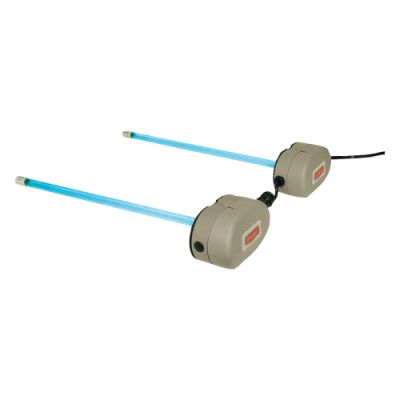
Bryant’s Preferred UV Lamp attacks and kills mold and bacteria that can grow in moist heating and cooling systems, and then circulate through your home. Silent operation enhances your family’s comfort and health.

Blue-Tube UV is the single most popular germicidal UV light product for HVAC systems in the world. Homeowners breathe easy knowing that the air their family breathes is protected by this proven technology. Blue-Tube UV is the simple, safe, and effective way to keep your air system clean and improve indoor air quality. This UV light model comes with a choice of bulb that lasts for either one or two years.

Single bulb with Carbon Cells, one or two-year lamp life expectancy

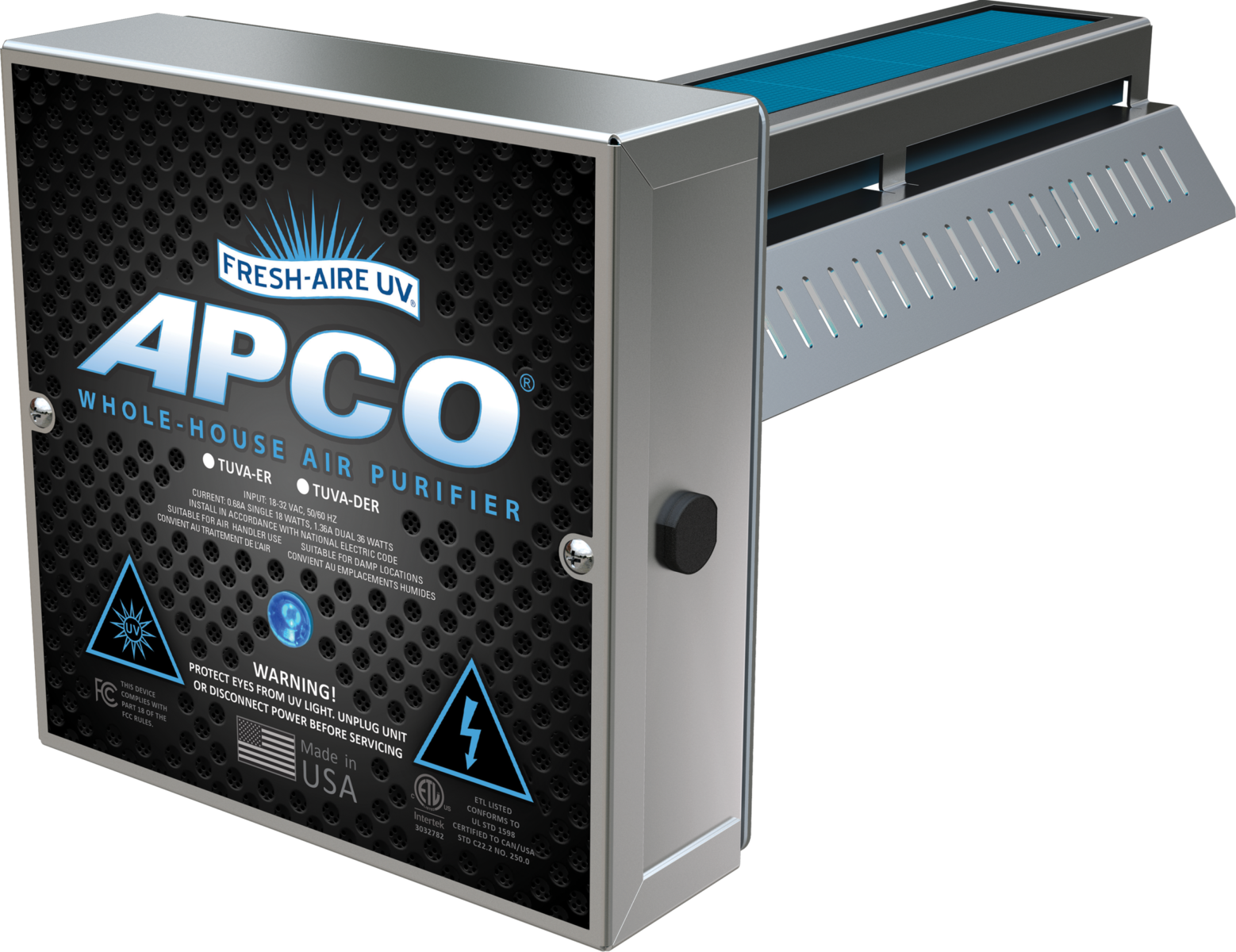
APCO® reduces odors (volatile organic compounds) and biological contaminants such as mold, bacteria, viruses, and allergens in indoor air. The system is installed in the duct work of the central air system. The award winning design of APCO® uses a unique combination UVC light and activated carbon cells to clean the air. Call us today or schedule an appointment with an advisor, to learn which IAQ options are best for you.

Did you know?

  • 50% of all illnesses are caused or aggravated by poor indoor air quality according to The American College of Allergy, Asthma & Immunology. A study cited by Kimberly-Clark Corporation found that for every 10 workers, poor indoor air quality caused an additional 6 sick days per year.
  • The U.S. Department of Energy (DOE) states poor indoor air quality can cost businesses up to $168 billion annually. Medical care and absenteeism contribute significantly to those costs.
  • Employers can increase workforce performance by roughly 10 % by implementing indoor air quality solutions – DOE.
  • By controlling contaminants such as dust mites, asthma cases can be reduced by 55 to 60% – The American Journal of Respiratory and Critical Care Medicine.

Comfort

Homes and businesses can greatly benefit from the use of a HVAC system installed with an ultraviolet (UV) light. Indoor Air Quality (IAQ) can greatly be improved with the use of a UV light that can eliminate contaminants such as, mold, fungi, viruses, bacteria, and odors. Properly installed, UV systems have been tested and achieve up to a *99.999% reduction on microorganisms. UV disinfection systems for room, surface & HVAC are an ideal proactive measure to complement filtration. Microorganisms, particularly viruses, are so small that filters are mostly ineffective. The UV systems have also been shown to reduce problematic molds and pathogens that are found within the HVAC system and drain pan that would otherwise be introduced and distributed throughout the envelope of the building. Call us today or schedule an appointment with an advisor, to learn which IAQ options are best for you.

How can we help you?

  • This field is for validation purposes and should be left unchanged.